
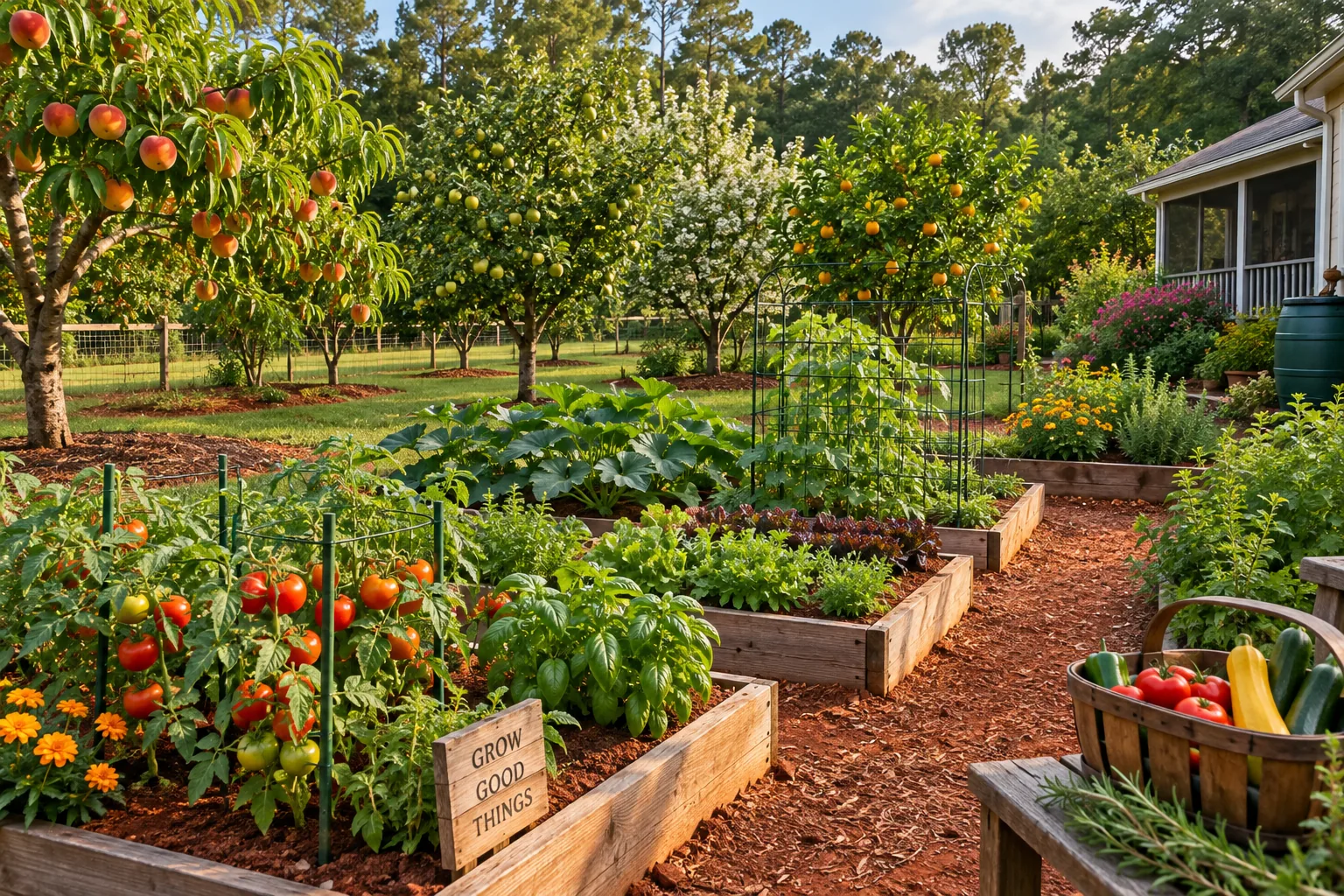
Alabama Vegetable Planting Calendar
Alabama’s long growing season gives gardeners several chances to grow fresh vegetables each year. The trick is planting each crop when temperatures suit it—not simply when the calendar says “spring.”
This calendar is a practical starting point for home gardeners. Dates vary with weather, elevation, and location, so treat them as windows rather than deadlines.
Regional rule of thumb: Central Alabama dates are the baseline. In North Alabama, spring planting is often about 10 days later and fall planting about 10 days earlier. In South Alabama, spring planting is often about 10 days earlier and fall planting about 10 days later.
Quick Seasonal Calendar
| Crop | Spring window | Fall window | Notes |
|---|---|---|---|
| Beets | February–March | August–September | Best in cool weather |
| Broccoli | February–March | August–September | Transplants are easiest |
| Cabbage | January–March | August–October | Heat slows growth |
| Carrots | February–March | August–October | Keep seedbed evenly moist |
| Collards | February–March | July–October | Excellent fall crop |
| Cucumbers | April–May | July–August | Plant after frost danger |
| Green beans | April–May | July–August | Succession plant every few weeks |
| Kale | February–March | August–September | Flavor improves in cool weather |
| Lettuce | January–March | August–October | Protect from afternoon heat |
| Mustard greens | February–March | August–October | Fast and dependable |
| Okra | April–June | July–August | Loves Alabama heat |
| Peppers | April–May | July | Use transplants |
| Radishes | February–April | August–October | One of the fastest crops |
| Summer squash | April–June | July–August | Watch for squash pests |
| Sweet corn | March–June | July in warmer areas | Plant in blocks for pollination |
| Sweet potatoes | April–June | — | Needs warm soil |
| Tomatoes | March–May | July–August | Fall crop works best from transplants |
| Turnips | February–April | August–October | Grow roots or greens |
| Watermelon | April–June | — | Give vines plenty of space |
January
January is planning season for much of Alabama, but gardeners in warmer areas can already begin cool-season crops.
Good choices include:
- Onion plants
- English peas in warmer locations
- Lettuce transplants
- Cabbage transplants
- Broccoli transplants
- Cauliflower transplants
- Mustard greens
Use cold snaps as a reminder that planting dates are flexible. Keep row cover handy when tender young plants are in the garden.
February
February begins the serious cool-season vegetable season.
Plant:
- Beets
- Carrots
- Collards
- English peas
- Irish potatoes
- Lettuce
- Mustard greens
- Radishes
- Spinach
- Turnips
This is also a good time to start warm-season transplants indoors if you plan to grow tomatoes and peppers from seed.
March
March can feel like spring one afternoon and winter the next morning.
Continue planting:
- Carrots
- Lettuce
- Radishes
- Spinach
- Turnips
- Broccoli
- Cabbage
In South Alabama, gardeners may begin warm-season crops earlier. Farther north, wait until frost danger has passed and soil temperatures have warmed.
April
April is one of the busiest gardening months.
Warm-season crops begin going into the ground:
- Bush beans
- Pole beans
- Cucumbers
- Sweet corn
- Summer squash
- Tomatoes
- Peppers
- Eggplant
- Southern peas
- Sweet potatoes
Don’t plant simply because the air feels warm. Warm-season crops perform best after the soil has warmed as well.
May
May is prime warm-season gardening time.
Plant or succession-plant:
- Beans
- Cucumbers
- Okra
- Peppers
- Southern peas
- Squash
- Sweet potatoes
- Tomatoes
- Watermelon
- Cantaloupe
Mulch after the soil warms to conserve moisture and suppress weeds.
June
June shifts the focus from planting to maintaining and harvesting, but there is still time for heat-loving crops.
Plant:
- Okra
- Southern peas
- Sweet potatoes
- Later plantings of beans
- Summer squash in suitable areas
Start watching your calendar for fall crops. Alabama’s fall garden begins earlier than many beginners expect.
July
July is hot, but it is also the beginning of fall-garden season.
Depending on your location, start:
- Fall tomatoes
- Fall peppers
- Cucumbers
- Summer squash
- Southern peas
- Some beans
- Brussels sprouts for later harvest
Young transplants need extra attention during extreme heat. Afternoon shade for a few days can reduce transplant shock.
August
August is a major fall planting month.
Plant:
- Beets
- Broccoli
- Carrots
- Collards
- Cucumbers
- Kale
- Lettuce
- Mustard
- Radishes
- Spinach
- Turnips
- Bush beans where the season allows
Keep seedbeds consistently moist. Tiny seedlings dry quickly in Alabama’s late-summer heat.
September
September brings better conditions for many cool-season crops.
Plant:
- Lettuce
- Mustard greens
- Radishes
- Spinach
- Turnips
- Kale
- Collards
- Garlic late in the month in cooler areas
This is an excellent time to replace exhausted summer crops with productive fall vegetables.
October
October is one of Alabama’s most pleasant gardening months.
Continue planting:
- Lettuce
- Radishes
- Turnips
- Mustard
- Collards
- Kale
- Garlic
- Onions in suitable areas
Use row cover when early cold fronts arrive.
November
Planting slows in North Alabama but can continue longer farther south.
Focus on:
- Garlic
- Onions
- Hardy greens
- Cover crops
- Mulching established beds
Remove diseased summer plant material rather than composting it unless your compost system gets hot enough to destroy pathogens.
December
December is mostly a maintenance and planning month.
Harvest hardy greens, protect crops during hard freezes, add compost to empty beds, and review what worked during the year.
Succession Planting
Instead of planting an entire packet of beans, lettuce, or radishes at once, plant smaller amounts every two or three weeks during the suitable season.
This spreads out your harvest and reduces the classic gardening problem of having nothing one week and forty cucumbers the next.
Use Your Local Frost Dates
Alabama covers several climate zones. Your actual last spring frost and first fall frost matter more than a statewide calendar.
Use this guide as your planning framework, then adjust for:
- Your county
- Elevation
- Recent weather
- Soil temperature
- Microclimates around your property
GardenGrowz Tip
Keep notes on your actual planting and harvest dates. After two or three seasons, your own garden journal becomes the most accurate planting calendar you can have.