
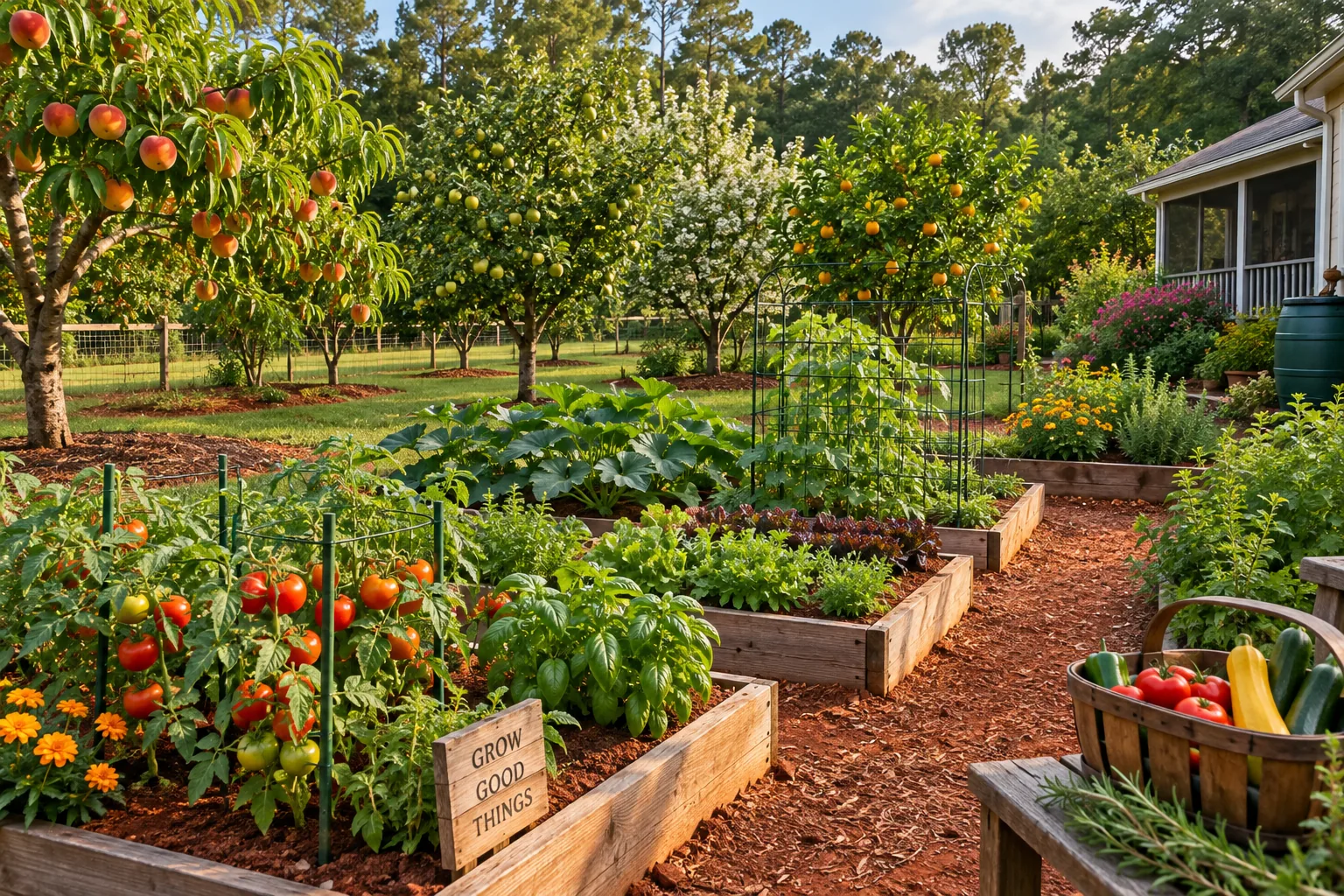
Fall Vegetable Gardening in Alabama
Fall may be Alabama’s most underrated gardening season.
The days become cooler, many leafy crops thrive, and working outside stops feeling like a competitive endurance sport.
The biggest surprise for new gardeners is that a fall garden starts while summer is still very much alive.
Start Earlier Than You Think
Many fall vegetables need weeks to mature before short winter days slow growth.
That means planting often begins in July and August.
Early fall crops include:
- Broccoli
- Brussels sprouts
- Cabbage
- Carrots
- Collards
- Kale
- Lettuce
- Mustard greens
- Radishes
- Spinach
- Turnips
Warmer parts of Alabama can plant many of these crops later than northern areas.
Calculate Backward From Frost
Look at:
- Your average first-frost date.
- The crop’s days to maturity.
- Extra time for slower growth as days shorten.
If a crop needs 60 days to mature, don’t assume planting it 60 days before frost is enough. Give yourself a cushion.
Starting Seeds in Summer Heat
Cool-season vegetables may need to germinate during very hot weather.
Help them by:
- Starting seed in trays under light shade
- Watering seedbeds lightly and frequently
- Using temporary shade cloth
- Transplanting late in the day
- Mulching after seedlings establish
Best Fall Crops for Beginners
Collards
Tough, productive, and well suited to Southern gardens.
Kale
Handles cool weather beautifully and can remain productive after light frosts.
Radishes
Fast-growing and great for small spaces.
Turnips
Grow them for roots, greens, or both.
Lettuce
Excellent once temperatures moderate. Succession plant for a longer harvest.
Broccoli
A little more demanding, but rewarding when planted at the right time.
Water Is Critical
Late summer and early fall can be dry.
Established vegetables commonly need around an inch of water per week from rain and irrigation, while germinating seeds and fresh transplants may need smaller amounts more frequently until roots establish.
Fall Pests Still Exist
Don’t assume cool-season vegetables are pest-free.
Inspect for:
- Cabbage worms
- Loopers
- Aphids
- Flea beetles
- Harlequin bugs
- Slugs and snails
Pest populations can be high after building throughout summer.
Extend the Season
Simple frost protection can keep a fall garden going much longer.
Useful tools include:
- Floating row cover
- Frost cloth
- Low tunnels
- Cold frames
Never lay heavy plastic directly on tender foliage during a freeze.
Clean Up the Summer Garden
Remove exhausted or diseased summer plants before planting fall crops.
This improves airflow, creates room, and can reduce pest and disease carryover.
Why Fall Gardens Are Worth It
Fall vegetables often have:
- Fewer heat-related problems
- Better flavor in cool conditions
- Lower irrigation demand
- Longer harvest windows
- Less weed pressure
If your spring garden becomes a jungle by July, fall is your second chance.