
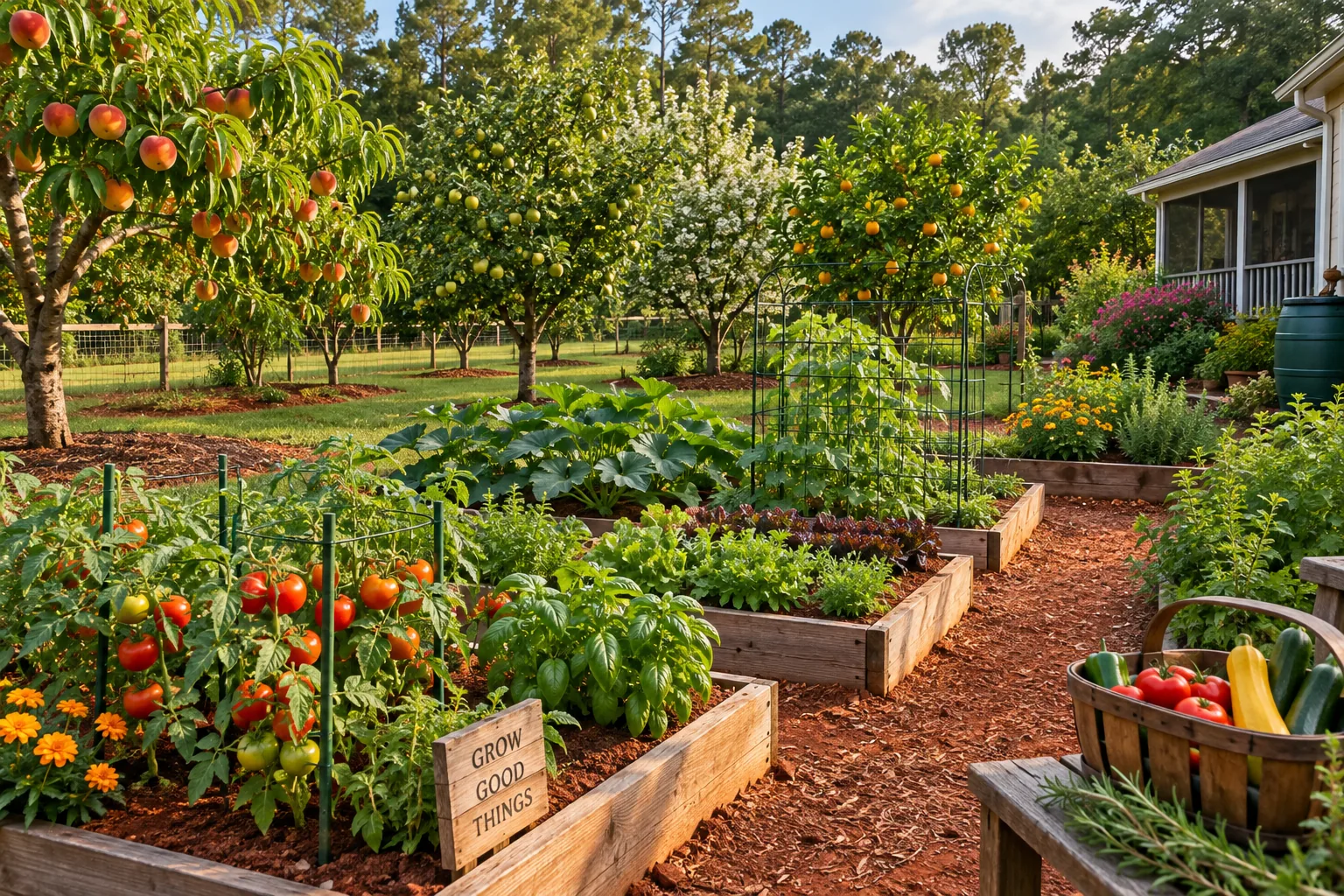
Gardening in Heavy Alabama Clay
Heavy clay can feel impossible.
Wet clay sticks to tools.
Dry clay can feel like concrete.
But clay soil can become productive garden soil with patient management.
First: Don’t Work It Wet
This is one of the most important rules.
If clay smears, shines, or sticks heavily to your shovel, it is too wet to work.
Tilling wet clay damages structure and creates hard clods.
Add Organic Matter
Use:
- Finished compost
- Shredded leaves
- Aged organic matter
- Cover crops
Organic matter improves structure over time.
Mulch the Surface
Mulch protects clay from:
- Baking hard
- Erosion
- Compaction from pounding rain
It also adds organic matter as it breaks down.
Raised Beds Can Help
Raised beds are especially useful if:
- Water stands after rain
- Soil is deeply compacted
- Construction has damaged the site
You do not need raised beds everywhere.
Use them where drainage is a real problem.
Avoid the Sand Shortcut
Adding a little sand to clay does not magically create loam.
Improving texture requires much more material than most gardeners expect.
Organic matter is usually more practical.
Stay Off the Beds
Create permanent paths.
Do not walk in planting areas.
Clay compacts easily.
Use Broadforks Carefully
A broadfork can loosen soil without completely turning it over.
Use only when soil moisture is appropriate.
Plant Cover Crops
Roots help create channels and improve soil biology.
Good cover crops can also protect bare soil.
Test the Soil
Clay may hold nutrients well, but pH can still limit availability.
Use a soil test before adding lime or fertilizer.
GardenGrowz Tip
The goal is not to eliminate clay.
The goal is to create structure, drainage, and biological activity within it.