
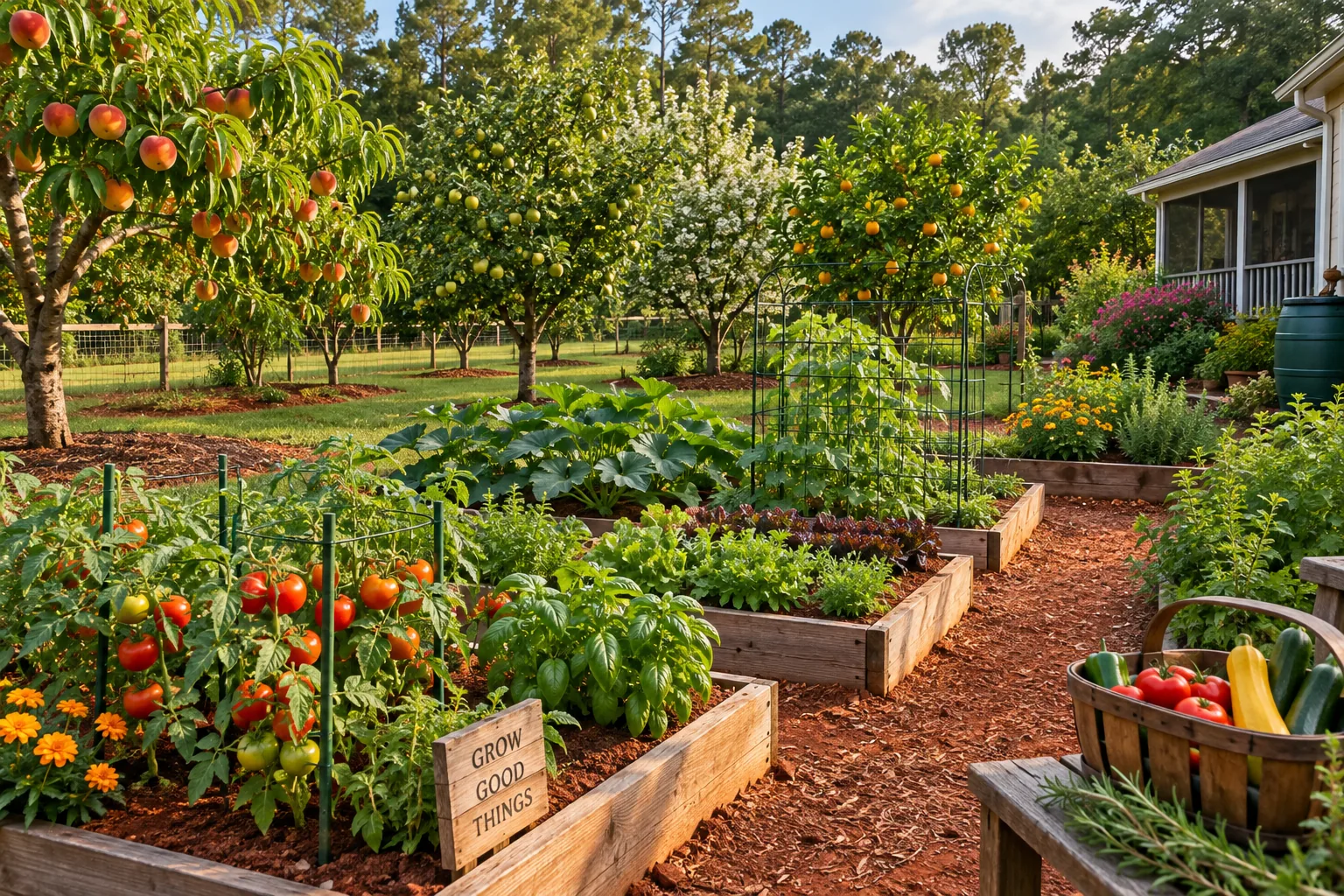
How to Keep a Garden Alive During a Southern Summer
By midsummer, Southern gardens can feel like a different ecosystem than they did in April.
The key is simplifying your routine around a few priorities.
1. Water Before Plants Are Desperate
Check soil moisture regularly.
Established plants generally prefer deep watering over frequent shallow watering.
During extreme heat, raised beds and containers may need more frequent checks.
2. Mulch Everything You Can
Bare soil loses moisture quickly.
A 2–4 inch layer of organic mulch can reduce stress dramatically.
3. Inspect Plants Often
Summer pest populations can grow quickly.
Check:
- Leaf undersides
- Stems
- Fruit
- New growth
Look for:
- Aphids
- Stink bugs
- Squash bugs
- Hornworms
- Japanese beetles
- Spider mites
4. Remove Diseased Material
Humidity can accelerate fungal and bacterial problems.
Remove badly diseased leaves and spent plants.
Do not leave heavily infected material in the bed.
5. Improve Airflow
Thin overcrowded growth where appropriate.
Keep weeds from closing in around crops.
Good airflow matters in humid weather.
6. Harvest Frequently
Overripe fruit drains plant energy.
Pick:
- Cucumbers
- Squash
- Beans
- Okra
- Tomatoes
regularly.
7. Accept That Some Crops Are Finished
Not every spring crop needs to survive until frost.
If a squash plant is mostly disease and pests, remove it.
Use the space for:
- Southern peas
- A fall crop
- A cover crop
8. Plan the Fall Garden
July and August are already fall-garden planning season in Alabama.
Start thinking about:
- Broccoli
- Cabbage
- Collards
- Kale
- Carrots
- Lettuce
- Turnips
9. Shade New Fall Seedlings
Cool-season seedlings can struggle in late-summer heat.
Use temporary shade and frequent light watering until established.
10. Keep It Manageable
Summer is not the time to make the garden more complicated.
Focus on:
- Water
- Mulch
- Harvest
- Pest control
- Removing failing plants
GardenGrowz Tip
The goal of summer gardening is not perfection.
It is keeping the garden healthy enough to bridge the gap between spring production and fall planting.