
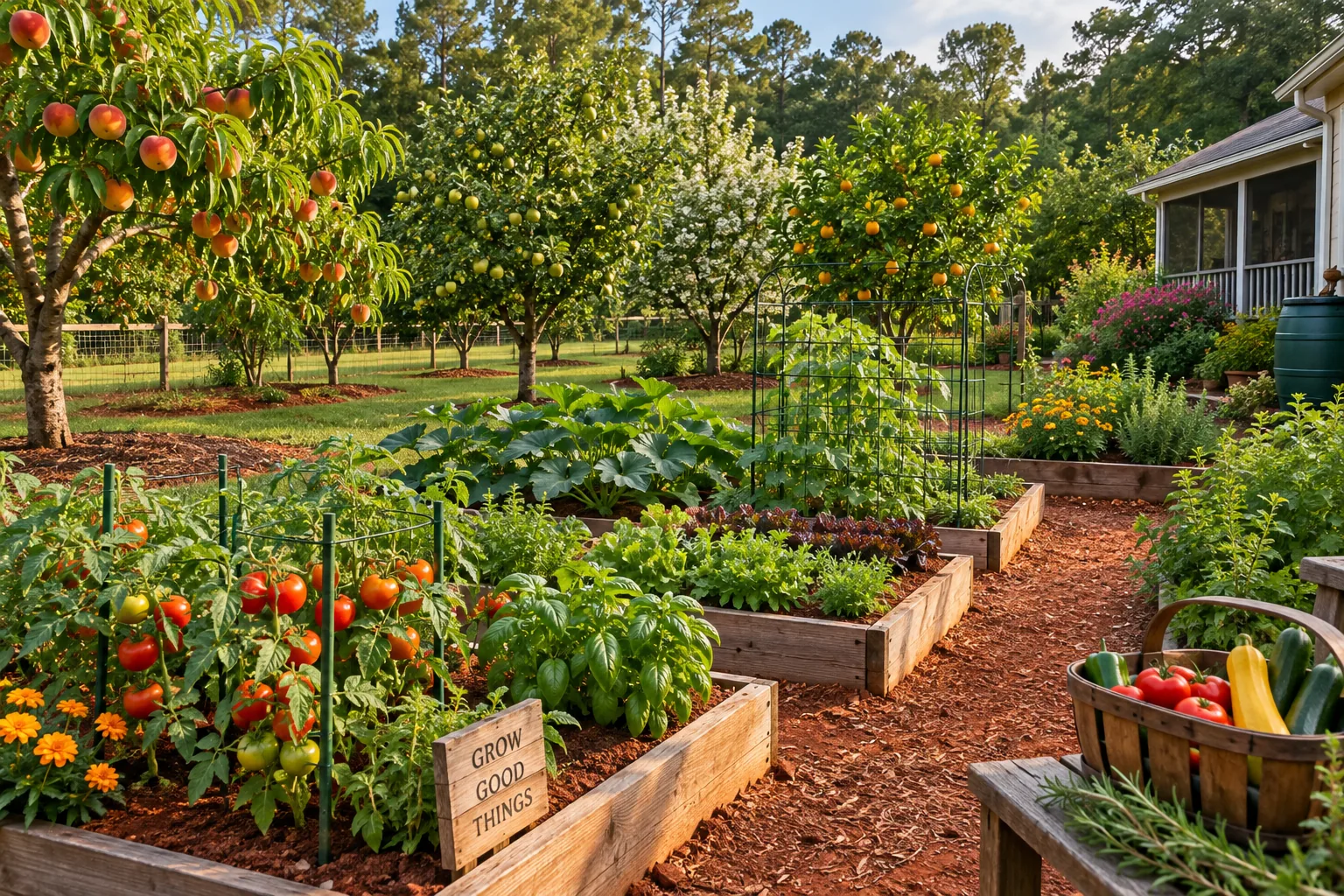
Managing Humidity and Fungal Disease
Alabama humidity is excellent for fungal disease.
It is less excellent for gardeners.
Warm temperatures plus moisture create ideal conditions for many leaf spots, mildews, blights, and fruit rots.
Start With Spacing
Crowded plants dry slowly.
Give crops enough room for air to move around leaves.
This is especially important for:
- Tomatoes
- Squash
- Cucumbers
- Zinnias
- Fruit trees
Water the Soil
Avoid wetting leaves when practical.
Use:
- Drip irrigation
- Soaker hoses
- Watering wands aimed at the root zone
Water Early
Morning watering allows foliage to dry faster.
Avoid frequent late-evening overhead irrigation.
Mulch
Mulch reduces soil splash.
Many disease organisms survive in soil or crop debris and spread upward when rain or irrigation hits bare ground.
Remove Diseased Leaves
Do not allow heavily infected foliage to remain packed around healthy growth.
Remove and discard seriously diseased material.
Prune for Airflow
For crops and fruit trees where pruning is appropriate:
- Remove crowded growth
- Open dense interiors
- Eliminate dead material
Do not overprune.
Rotate Crops
Avoid planting the same family in the same bed repeatedly.
Crop rotation can reduce some soil-borne disease pressure.
Choose Resistant Varieties
Disease resistance is one of the easiest forms of disease control.
Look for varieties bred for resistance to common regional problems.
Don’t Work Plants When Wet
Handling wet plants can spread some bacterial and fungal diseases.
Wait until foliage is dry when practical.
Watch the Weather
Extended periods of:
- Warm nights
- Frequent rain
- High humidity
often trigger disease outbreaks.
Inspect more frequently during these periods.
GardenGrowz Tip
You cannot control Alabama humidity.
You can control spacing, airflow, watering, and sanitation.