
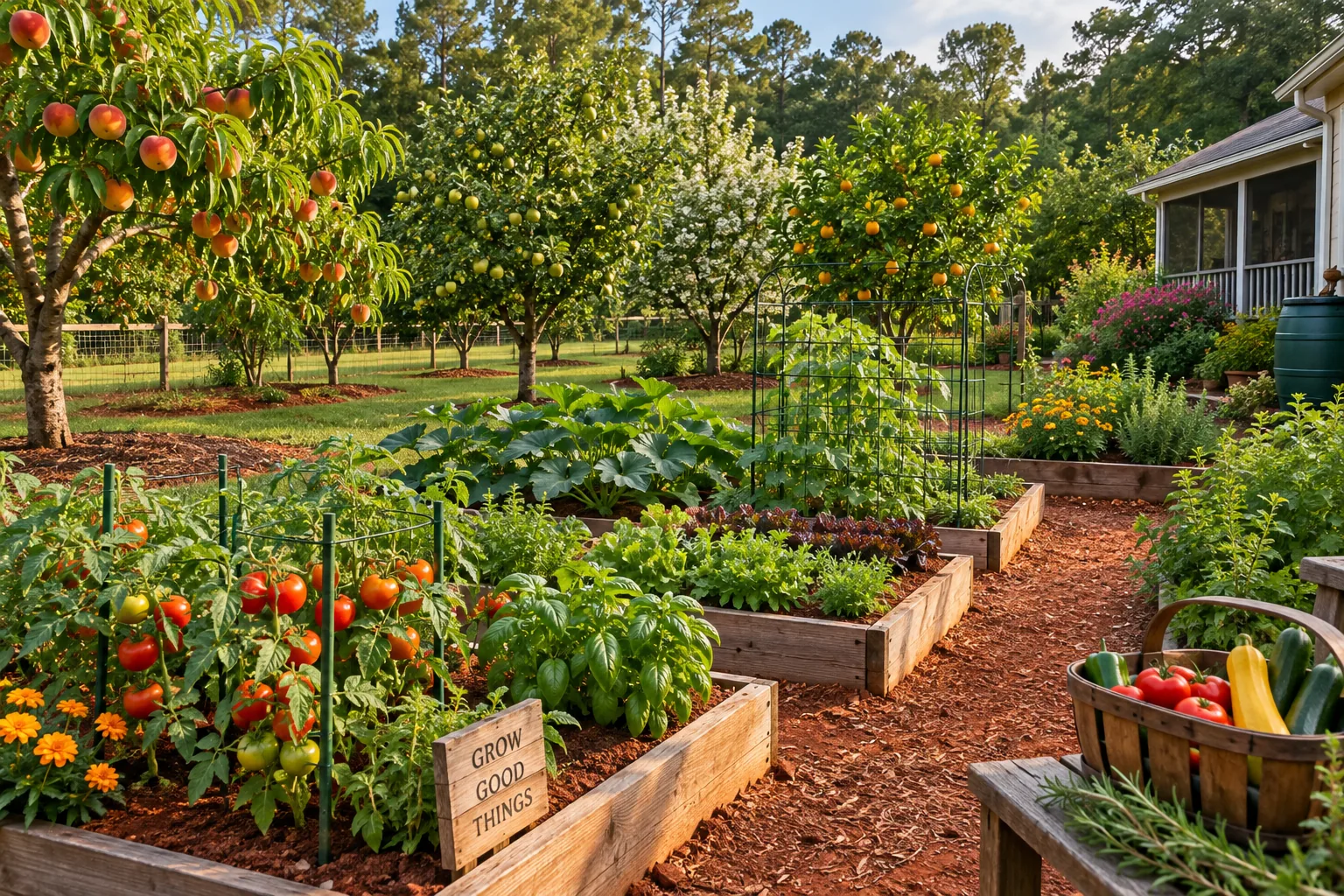
Preparing Your Garden for Severe Weather
Alabama gardens may face:
- Strong thunderstorms
- Straight-line winds
- Hail
- Heavy rain
- Tornado-producing systems
You cannot storm-proof a garden completely.
You can reduce avoidable damage.
Secure Containers
Move small pots to a sheltered area.
Large containers should be:
- Stable
- Low enough not to tip
- Away from loose structures
Check Trellises
Before storm season, reinforce:
- Tomato cages
- Cucumber trellises
- Pole bean supports
- Arbors
A weak trellis can become both damaged and dangerous in high wind.
Stake Young Trees
Youngly planted trees may need temporary staking if roots are not yet stable.
Do not rigidly immobilize the trunk unless necessary.
Remove Loose Materials
Secure:
- Row cover
- Empty pots
- Garden tools
- Lightweight furniture
- Plastic trays
Anything loose can become airborne.
Harvest What You Can
If severe weather is expected, harvest ripe:
- Tomatoes
- Peppers
- Cucumbers
- Squash
Fruit already close to maturity is easier to protect indoors than on the plant.
Improve Drainage
Heavy rain is often as damaging as wind.
Keep:
- Drainage channels clear
- Raised-bed outlets open
- Downspouts directed away from beds
Protect Seedlings
Low tunnels or sturdy crates may help protect very small plants from hail.
Do not create wind-catching structures.
After the Storm
Check for:
- Broken limbs
- Exposed roots
- Flooded beds
- Damaged trellises
- Split stems
- Standing water
Don’t Rush Cleanup
Some bent plants recover.
Stake or support damaged stems before removing everything.
Prune Cleanly
If branches are torn:
- Make clean cuts
- Remove jagged damaged wood
Watch for Disease
Storm damage creates wounds.
Warm, wet weather afterward can increase disease pressure.
Inspect closely during the following week.
GardenGrowz Tip
The safest severe-weather preparation is the one completed before the warning is issued.