
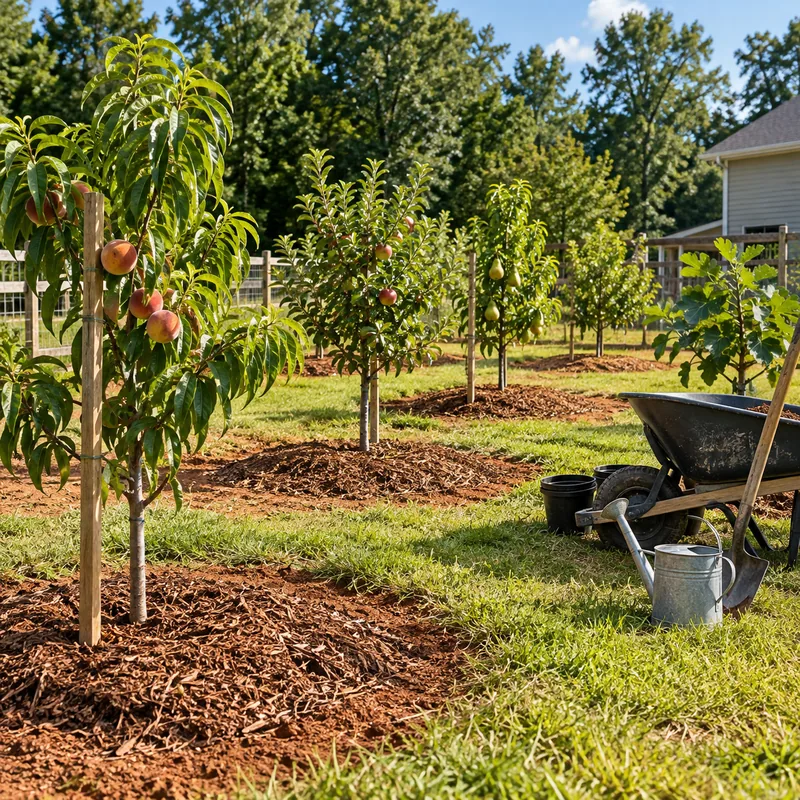
Starting a Backyard Orchard in Alabama
A backyard orchard sounds romantic: peaches in summer, apples in fall, figs by the fence, maybe a few blueberries nearby.
It can absolutely become that.
But fruit trees are long-term plants, and decisions made before planting determine how easy—or difficult—the orchard will be for years.
Start With the Site
Fruit trees generally need:
- Full sun
- Good air movement
- Well-drained soil
- Enough space for mature trees
- Reliable access to water
- Protection from mower and string-trimmer damage
Avoid planting in spots where water stands after rain.
Test the Soil First
Before buying trees, test the soil.
A soil test can guide lime and fertilizer decisions and reveal whether the site needs preparation before planting.
Correcting problems before trees are in the ground is much easier than correcting them later.
Match Fruit to Alabama
Alabama is not one single fruit-growing climate.
Winter chilling, summer heat, disease pressure, and frost timing vary from north to south.
Potential backyard fruits include:
- Apples
- Peaches
- Pears
- Plums
- Figs
- Persimmons
- Muscadines
- Blueberries
- Blackberries
Variety selection matters as much as the fruit species itself.
Understand Chill Hours
Many deciduous fruit trees require a certain amount of winter chilling before they grow and flower normally.
A variety needing more chilling than your location receives may perform poorly.
A variety with too low a chilling requirement can begin growing too early and be damaged by late frost.
Buy varieties recommended for your part of Alabama.
Pollination Matters
Some fruit varieties are self-fruitful.
Others require pollen from a compatible second variety blooming at the same time.
Before buying a tree, find out whether you need:
- One tree
- Two compatible cultivars
- A specific pollinizer
- Male and female plants
This prevents the frustrating experience of growing a beautiful tree that rarely produces fruit.
Think About Mature Size
That little tree at the nursery will not stay little.
Consider:
- Mature height
- Mature canopy width
- Root space
- Power lines
- Buildings
- Septic systems
- Driveways
- Shade cast onto vegetable gardens
Dwarf or semi-dwarf rootstocks may be useful where space is limited.
Don’t Plant Too Many
A few well-managed trees can produce a tremendous amount of fruit.
Start small.
Three carefully selected trees that receive proper pruning, spraying when necessary, thinning, irrigation, and harvest are more useful than fifteen neglected trees.
Plan Irrigation
New trees require consistent moisture while roots establish.
Drip irrigation is ideal because it delivers water directly to the root zone without wasting water between trees.
Keep irrigation components where you can inspect and repair them.
Mulch, But Don’t Volcano Mulch
Apply mulch over the root zone to reduce weeds and conserve moisture.
Keep mulch several inches away from the trunk.
A mound of mulch piled against bark holds moisture where you don’t want it and can encourage trunk problems.
Protect the Trunk
Mower and string-trimmer injuries can permanently damage young trees.
Create a grass-free mulched circle around each tree.
Expect Pruning
Fruit trees are not plant-it-and-forget-it landscaping.
Pruning helps manage:
- Structure
- Height
- Light penetration
- Airflow
- Fruiting wood
- Harvest access
Different fruit species require different training systems.
Keep an Orchard Journal
Record:
- Variety
- Rootstock
- Planting date
- Source
- First bloom
- Harvest dates
- Pest problems
- Disease problems
- Pruning dates
- Yield
An orchard is a multi-year project. Notes become extremely valuable as the trees mature.
Start With a Plan, Not a Shopping Cart
Before buying anything, draw the orchard.
Mark tree locations at mature spacing and note pollination partners.
Future you will be very grateful.