
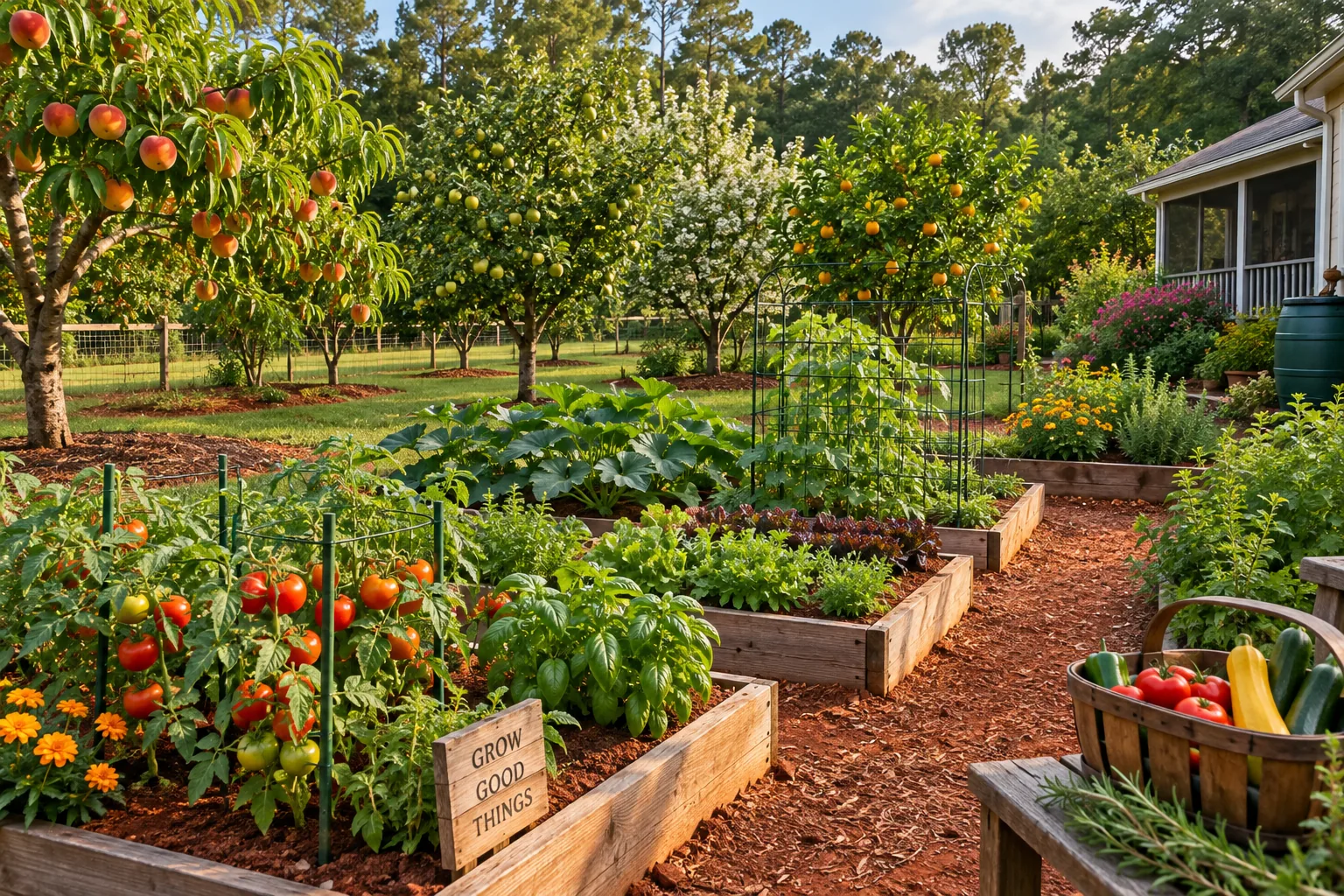
What to Plant This Month in Alabama
Wondering what you should be planting right now?
Alabama gardeners have something to grow during almost every month of the year. The key is matching crops to the season and adjusting for your part of the state.
January
Plant or transplant: onions, lettuce, cabbage, broccoli, cauliflower, mustard greens, and English peas in warmer areas.
Garden jobs: order seeds, clean tools, plan crop rotation, prepare beds when soil is workable.
February
Plant: beets, carrots, collards, Irish potatoes, lettuce, mustard, radishes, spinach, turnips, and peas.
Start indoors: tomatoes, peppers, eggplant, and selected herbs.
February is when the spring garden starts becoming real.
March
Plant: cool-season crops plus potatoes and additional succession plantings of greens and roots.
Warm-season note: South Alabama may begin warm-season planting earlier, but Central and North Alabama gardeners should pay close attention to frost forecasts.
April
Plant: beans, corn, cucumbers, squash, tomatoes, peppers, eggplant, southern peas, and sweet potatoes as conditions warm.
April is the month when restraint pays off. A warm weekend does not guarantee frost season is finished.
May
Plant: okra, beans, southern peas, cucumbers, squash, melons, sweet potatoes, peppers, and tomatoes.
Mulch beds once soil is warm, install supports before plants become tangled, and begin checking for insects several times each week.
June
Plant: okra, southern peas, beans, sweet potatoes, and late squash where appropriate.
Start planning: broccoli, cabbage, collards, carrots, kale, and other fall crops.
July
Yes, you can still plant a garden in July.
Begin fall tomatoes and peppers from transplants, and plant cucumbers, beans, squash, and southern peas where your frost window allows.
Start cool-season seeds in protected areas rather than baking young seedlings in full afternoon sun.
August
Fall gardening moves into full swing.
Plant:
- Broccoli
- Beets
- Carrots
- Collards
- Kale
- Lettuce
- Mustard
- Radishes
- Spinach
- Turnips
Keep newly seeded beds consistently moist.
September
Continue planting leafy greens and root crops.
September is also a great month to reset neglected beds: pull weeds, remove spent crops, add compost, repair irrigation, and prepare for fall.
October
Plant garlic, onions where appropriate, lettuce, radishes, turnips, mustard, kale, collards, and other hardy greens.
Cooler temperatures mean fewer watering demands and a much nicer time to work outside.
November
South Alabama may still have several planting opportunities. Farther north, concentrate on hardy crops, garlic, onions, mulch, and season extension.
Use frost cloth or row cover to keep established vegetables producing longer.
December
Harvest hardy greens, protect crops from hard freezes, and improve empty beds with compost and mulch.
December is also a perfect time to review your garden journal and decide what earned a place in next year’s garden.
North, Central, and South Alabama
Planting dates shift across the state.
As a simple guide:
- North Alabama: spring generally arrives later; fall frost arrives sooner.
- Central Alabama: use standard statewide planting charts as a baseline.
- South Alabama: spring planting can begin earlier; fall planting often continues later.
Don’t Let the Calendar Boss Your Garden Around
Use the month as a guide, not a command.
Before planting, consider:
- Current soil temperature
- Ten-day weather trends
- Frost risk
- Rainfall
- Your garden’s drainage
- The crop’s days to maturity
A gardener who watches conditions will usually outperform a gardener who plants strictly by a date.