Common First-Year Gardening Mistakes
Every gardener makes mistakes.
Experienced gardeners are simply people who have already made many of them and remember at least some.
Here are the most common first-year problems—and how to avoid them.
1. Starting Too Big
A large garden looks exciting in spring.
By July, it can become overwhelming.
Start small enough that you can:
- Weed it
- Water it
- Harvest it
- Inspect it regularly
You can always expand next year.
2. Planting Too Early
Warm spring weather can be deceptive.
Tomatoes, peppers, cucumbers, and squash do not benefit from cold soil or late frost.
Use local planting dates and current weather.
3. Ignoring Sunlight
Vegetables need direct sun.
A location that is convenient but shady will limit production.
Observe your yard before planting.
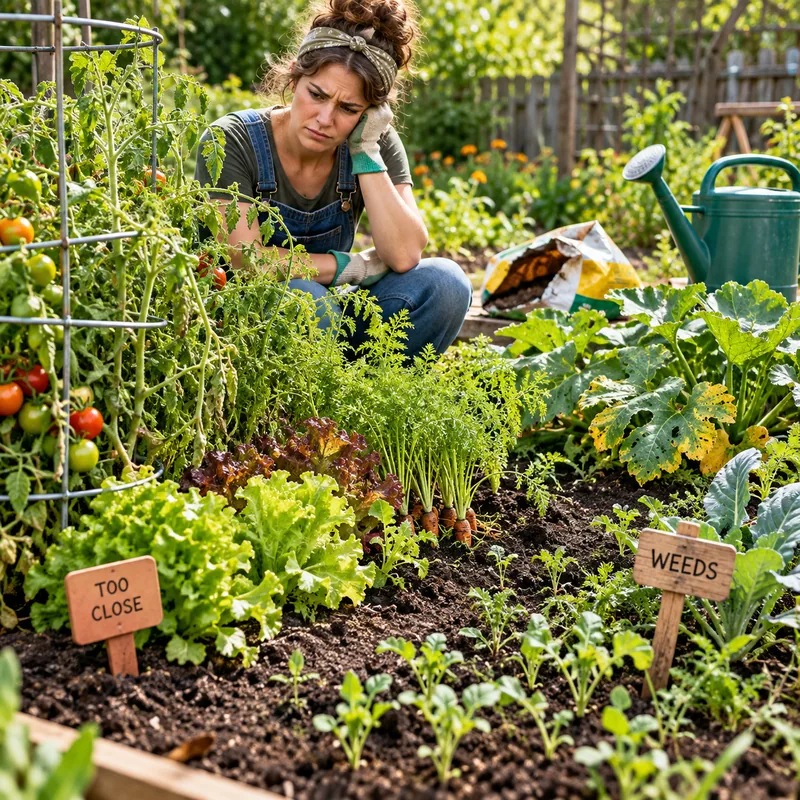
4. Overcrowding
Tiny seedlings encourage bad decisions.
Gardeners often think:
Surely I can fit one more tomato here.
A month later, the plants are fighting for light and airflow.
Use mature spacing.
5. Watering Too Shallowly
A quick sprinkle wets the surface but may not reach roots.
Established plants generally benefit from deeper watering.
Check the soil below the surface.
6. Watering Too Much
Plants can suffer from too much water too.
Constantly saturated soil can cause:
- Root problems
- Yellowing
- Disease
- Slow growth
Roots need air.
7. Not Mulching
Bare soil:
- Dries faster
- Grows more weeds
- Experiences greater temperature swings
- Splashes soil onto leaves
Mulch makes gardening easier.
8. Using Too Much Fertilizer
More fertilizer does not equal more vegetables.
Too much nitrogen can produce huge green plants with poor fruit production.
Use a soil test when possible.
9. Ignoring Soil
Plants cannot compensate for terrible root conditions forever.
Improve:
- Drainage
- Organic matter
- Compaction
- pH when needed
Healthy soil makes almost everything easier.
10. Treating Every Insect as a Pest
Many insects are beneficial.
Before spraying:
- Identify the insect.
- Decide whether it is causing meaningful damage.
- Choose the least disruptive response.
11. Waiting Too Long to Notice Problems
Walk through the garden often.
Look for:
- Wilting
- Holes
- Eggs
- Caterpillars
- Leaf spots
- Irrigation problems
Small problems are easier to manage than large ones.
12. Planting Crops Your Family Does Not Eat
Growing vegetables is fun.
Throwing away baskets of vegetables nobody wants is not.
Grow what you actually use.
13. Forgetting Support Structures
Install cages and trellises early.
Tomatoes, cucumbers, peas, and pole beans quickly become difficult to handle without support.
14. Letting Weeds Take Over
Weeds compete for:
- Water
- Light
- Nutrients
Pull them while they are small.
Mulch helps prevent the problem.
15. Harvesting Too Late
Many vegetables taste best when harvested young.
Watch:
- Squash
- Cucumbers
- Green beans
- Okra
- Radishes
A vegetable does not improve simply because it gets bigger.
16. Expecting Perfection
Leaves will have holes.
A tomato may crack.
A squash plant may die.
Birds may find your berries.
This does not mean the garden failed.
17. Not Keeping Notes
Write down:
- What you planted
- When you planted it
- What worked
- What failed
- What you liked
Your first year is not just about harvest.
It is about building local knowledge.
GardenGrowz Tip
A successful first garden is not the garden with zero problems.
It is the garden that makes you want to plant again next year.