
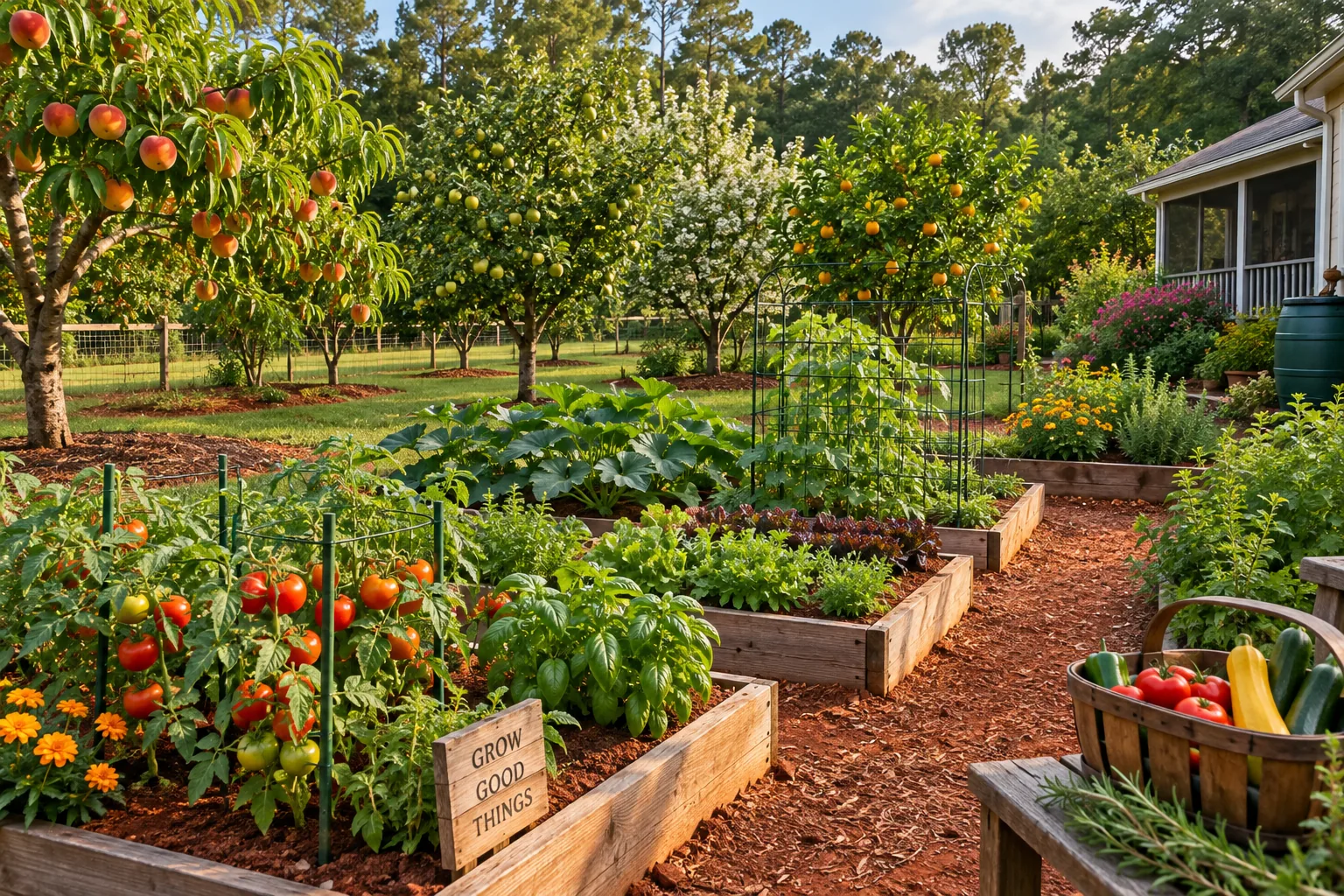
How Often Should You Water Your Garden?
“How often should I water?” sounds like a simple question.
It isn’t.
A tomato growing in a raised bed in July may need water much sooner than a tomato growing in clay soil after two inches of rain.
Instead of watering by a fixed schedule, learn to read the soil and plants.
A Useful Starting Point
Many established vegetable gardens perform well with roughly one inch of water per week from rainfall and irrigation, but that is only a starting point.
Needs change with:
- Temperature
- Wind
- Humidity
- Plant size
- Soil type
- Mulch
- Raised beds vs. in-ground soil
- Rainfall
- Root depth
Raised beds may need substantially more frequent watering during Alabama summer heat because they drain faster.
Check the Soil
Stick your finger several inches into the soil.
If it is still moist below the surface, watering may not be necessary.
For raised beds, check roughly 2–4 inches deep because the surface can look dry while the root zone remains moist.
Water Deeply
For established plants, deep watering encourages a deeper root system.
Frequent shallow watering keeps moisture near the surface and can encourage shallow roots.
Water long enough for moisture to penetrate the active root zone.
Seedlings Are Different
Seeds and tiny seedlings have shallow roots.
Until established, they may need:
- Light watering
- More frequent watering
- Protection from drying winds
- Temporary shade during extreme heat
A carrot seed does not care that the soil six inches down is moist if the top half-inch has turned to dust.
Best Time to Water
Morning is usually ideal.
Plants receive water before the hottest part of the day, and any wet foliage has time to dry.
If plants are severely wilted from lack of water, don’t refuse to water just because it isn’t morning. A stressed plant needs water when it needs water.
Water the Root Zone
Drip irrigation and soaker hoses are excellent tools because they deliver moisture where roots can use it.
They also reduce leaf wetness compared with overhead sprinklers.
What About Rain?
Use a rain gauge.
A thunderstorm that sounds dramatic from inside the house may deliver surprisingly little usable rain—or it may deliver more than enough.
Measure instead of guessing.
Signs of Too Little Water
Plants may show:
- Persistent wilting
- Slow growth
- Dry soil several inches down
- Small fruit
- Blossom or fruit drop
- Leaf scorch
Remember that temporary afternoon wilting can occur even when soil contains moisture. Check again later and inspect the soil before automatically watering.
Signs of Too Much Water
Overwatering can cause:
- Yellowing
- Root decline
- Constantly saturated soil
- Fungal problems
- Poor growth
- Nutrient loss
Roots need oxygen as well as water.
Mulch Changes Everything
A few inches of organic mulch can significantly slow evaporation and reduce temperature swings.
Mulched beds often require less frequent irrigation than bare soil.
Container Gardens
Containers dry more quickly than garden soil.
Large vegetable containers may need daily checking during hot, windy weather.
Small containers can dry dangerously fast.
Create a Better Watering Routine
Instead of “water every Tuesday,” try:
- Check the weather.
- Measure recent rainfall.
- Feel the soil.
- Check plant condition.
- Water deeply if needed.
- Recheck after a day or two during extreme heat.
Water according to conditions, not habit.