
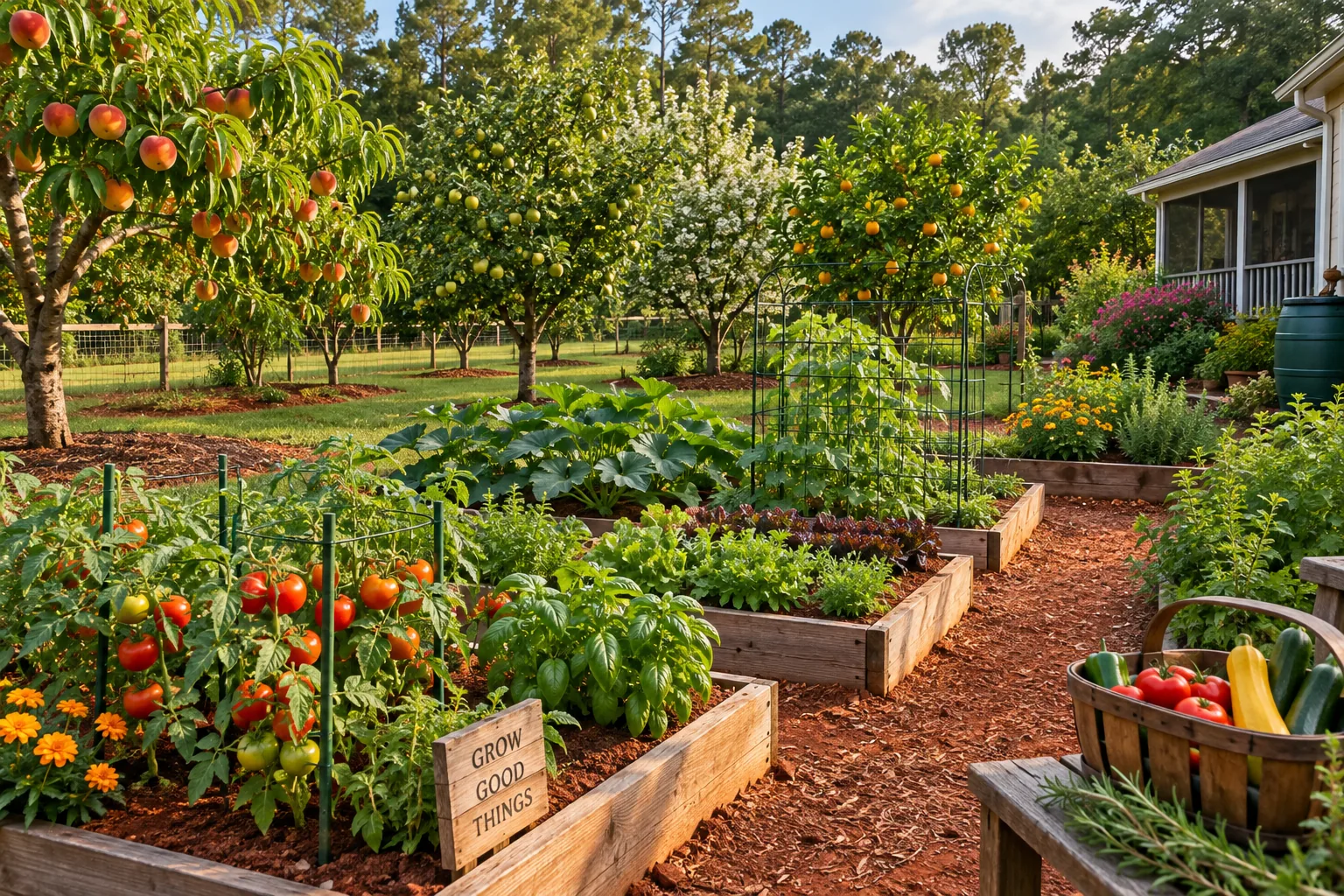
Spring Vegetable Gardening in Alabama
Spring gardening in Alabama is a tale of two gardens.
The first is the cool-season garden of lettuce, peas, carrots, potatoes, broccoli, and greens. The second begins after frost danger passes, when tomatoes, peppers, beans, cucumbers, and squash take over.
Understanding that transition makes spring gardening much easier.
Begin With Cool-Season Crops
Many vegetables prefer cool weather and should be planted well before tomato season.
Good early crops include:
- Broccoli
- Cabbage
- Carrots
- Collards
- English peas
- Irish potatoes
- Lettuce
- Mustard greens
- Radishes
- Spinach
- Turnips
These crops can tolerate cooler soil and temperatures better than summer vegetables.
Don’t Rush Tomatoes
Alabama’s first warm spell causes an annual outbreak of tomato fever.
Wait until frost danger has passed for your location and the soil has warmed before planting heat-loving crops.
Tomatoes, peppers, eggplant, cucumbers, squash, okra, and beans do not benefit from sitting in cold soil.
Prepare the Soil
Before planting:
- Test the soil if you haven’t done so recently.
- Remove winter weeds.
- Add finished compost.
- Correct drainage problems.
- Avoid working clay soil while it is saturated.
- Install irrigation before plants fill the beds.
Repeatedly tilling wet clay can destroy its structure and create hard clods.
Plan for Alabama Rain
Spring can bring heavy rain.
Raised beds or gently mounded rows can help where drainage is poor. Mulch reduces soil splash and erosion, but wait until warm-season soil has warmed before applying a heavy mulch layer.
Transition to Warm-Season Crops
After frost danger passes, plant:
- Tomatoes
- Peppers
- Beans
- Cucumbers
- Squash
- Corn
- Eggplant
- Southern peas
- Sweet potatoes
Okra prefers genuinely warm conditions and is worth waiting for.
Succession Plant
Instead of planting every bean or cucumber seed on the same day, make smaller plantings every few weeks while conditions remain favorable.
This creates a longer harvest and gives you a second chance if weather or pests ruin the first planting.
Install Supports Early
Put tomato cages, trellises, and bean supports in place before plants need them.
Trying to force a cage over a sprawling tomato plant in June is an excellent way to break branches and question your gardening decisions.
Watch for Pest Problems Early
Inspect young plants frequently.
Look under leaves and around stems for:
- Aphids
- Flea beetles
- Cutworms
- Cucumber beetles
- Early squash pests
- Caterpillars
Identify the pest before choosing a treatment.
Spring Watering
Rainfall may be abundant one week and absent the next.
Check soil moisture below the surface instead of watering by habit. Deep, less frequent watering is usually better for established plants than frequent shallow watering.
Seedlings are the exception: keep the upper soil layer consistently moist while seeds germinate and young roots develop.
Your Spring Garden Goal
The goal isn’t to plant everything on the first sunny Saturday.
A better spring garden develops in stages:
- Cool-season crops first
- Warm-season crops after frost
- Heat-loving crops after the soil warms
- Succession plantings for extended harvests
That rhythm works with Alabama weather instead of fighting it.