Starting Seeds Indoors
Starting seeds indoors gives you more variety, lowers the cost per plant, and lets you begin gardening weeks before outdoor conditions are ready.
It can also produce a tray of tall, pale seedlings leaning desperately toward a window.
The difference is mostly light, timing, moisture, and airflow.
What You Need
You don’t need an elaborate greenhouse.
Start with:
- Fresh seed
- Seed-starting mix
- Containers with drainage
- Seed trays
- Labels
- A spray bottle or gentle watering setup
- Strong grow lights
- A timer
- A small fan if needed for airflow
Use Seed-Starting Mix
Garden soil is usually too dense for seed trays.
Use a sterile, fine-textured seed-starting or germination mix that holds moisture while still allowing air around developing roots.
Moisten the mix before filling cells.
Read the Seed Packet
The packet tells you:
- Planting depth
- Germination time
- Indoor starting recommendations
- Days to maturity
- Spacing
- Light requirements
Some seeds should not be started indoors because they dislike root disturbance.
When to Start
Work backward from the date the crop can safely be transplanted outdoors.
Common crops started indoors include:
- Tomatoes
- Peppers
- Eggplant
- Broccoli
- Cabbage
- Many flowers and herbs
The correct timing depends on the crop.
Starting too early creates overgrown transplants that are difficult to manage.
How Deep Should Seeds Go?
A common guideline is to plant seeds approximately two to three times as deep as the seed is wide, but always follow the packet for species-specific needs.
Some tiny seeds need light and are barely covered.
Light Is Usually the Biggest Problem
A bright window is often not bright enough.
Seedlings need strong, consistent light.
Position grow lights close enough to produce compact growth without overheating the plants, and adjust them upward as seedlings grow.
Long, thin, leaning seedlings are usually asking for more light.
Keep the Mix Moist, Not Soggy
Before germination, the seed zone should remain consistently moist.
After seedlings emerge, allow slightly more drying between waterings while never letting tiny seedlings completely dry out.
Bottom watering can reduce disturbance to young plants.
Provide Airflow
Gentle air movement can help reduce overly humid conditions and encourage stronger stems.
Don’t blast seedlings with a fan.
A light breeze is enough.
Thin Seedlings
If several seedlings emerge in one cell, remove extras rather than allowing them to compete indefinitely.
Usually the strongest seedling wins the apartment.
Pot Up When Needed
Fast-growing seedlings may outgrow small cells before outdoor planting time.
Move them into larger containers before they become severely root-bound.
Harden Off
Indoor seedlings cannot go directly from your climate-controlled home into full Alabama sun and wind.
Harden them off gradually over about a week:
- Begin with a short period outdoors in shade.
- Increase outdoor time daily.
- Gradually introduce morning sun.
- Protect from strong wind and cold.
- Work toward normal garden conditions.
Label Everything
Tomato seedlings look surprisingly alike when you have twelve varieties.
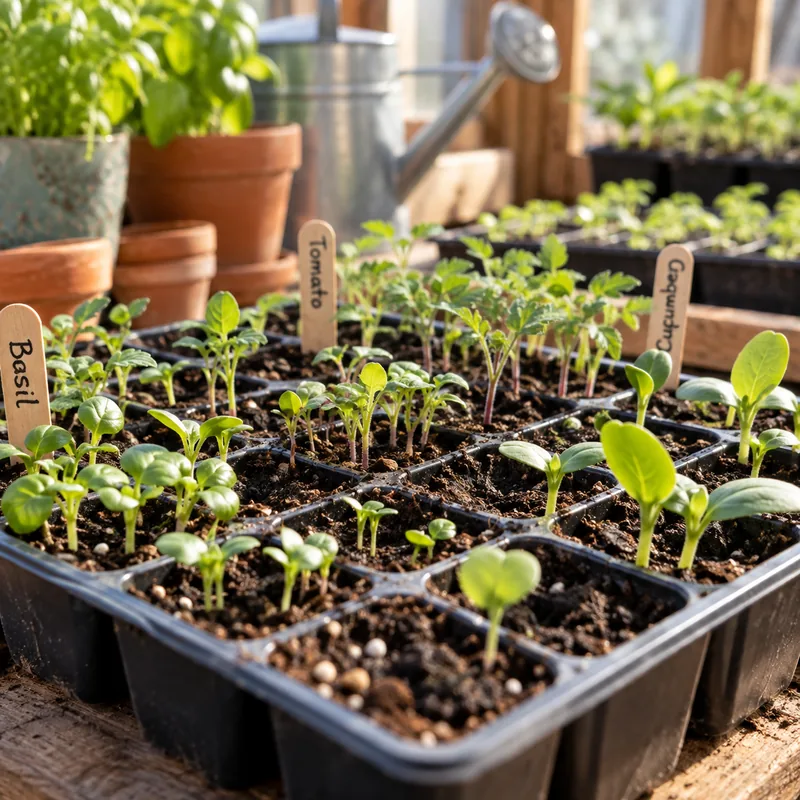
Label trays when you sow them—not later when you are convinced you’ll remember.
You won’t.
Best Beginner Seeds to Start Indoors
Try:
- Tomatoes
- Peppers
- Basil
- Broccoli
- Cabbage
- Marigolds
- Zinnias
Direct-sow crops like beans, corn, radishes, carrots, and many squash are often easier planted directly in the garden.
Keep Notes
Record:
- Variety
- Sowing date
- Germination date
- Potting-up date
- Transplant date
Within a few seasons, you’ll know exactly when seed-starting should begin in your home and for your garden.