
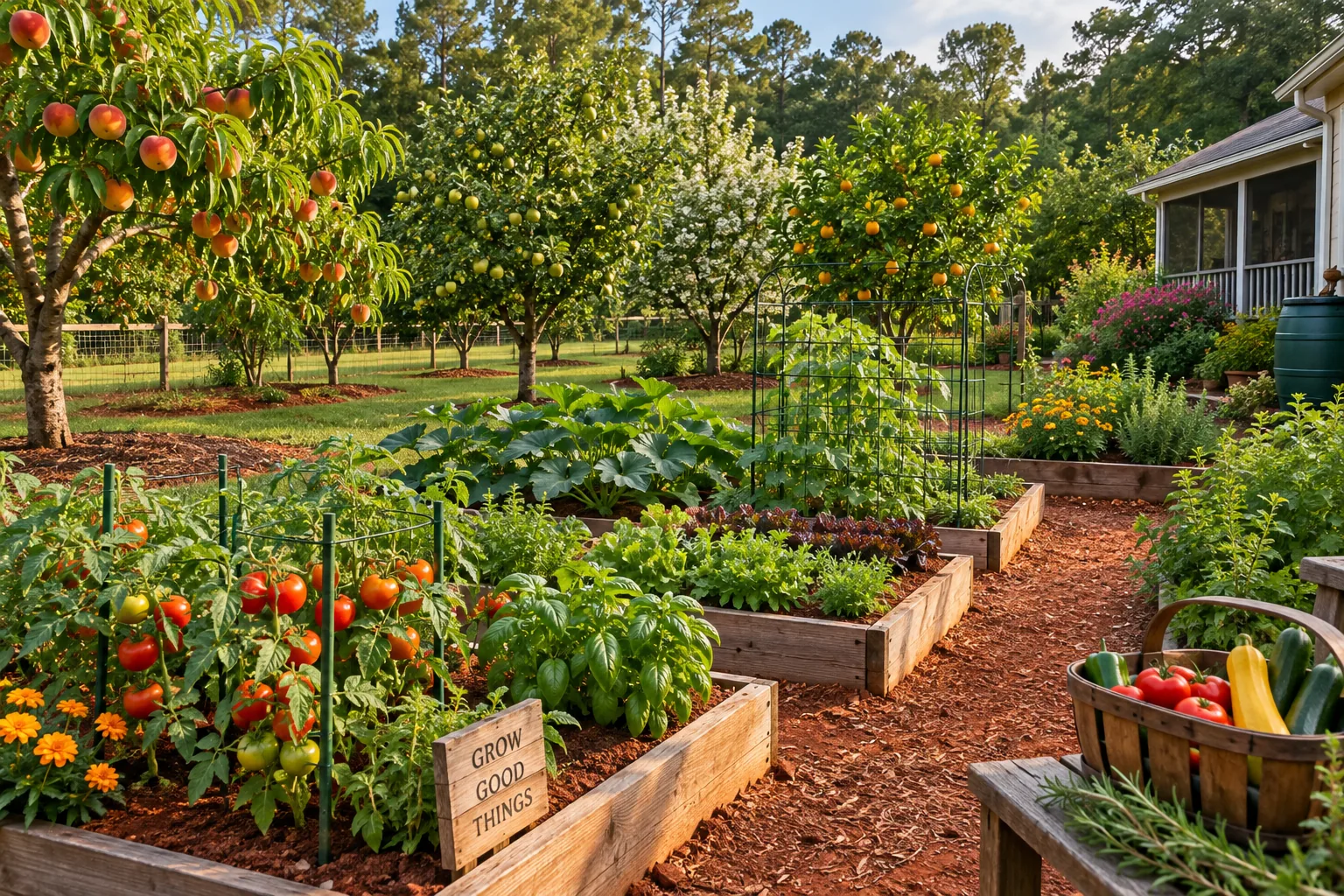
When Should You Fertilize Your Garden?
Fertilizer is most useful when plants actually need nutrients.
Applying it automatically can waste money and create problems.
Start With a Soil Test
Before the season begins, test established garden soil.
Use recommendations to guide:
- Lime
- Phosphorus
- Potassium
- General fertilizer needs
Before Planting
Some crops benefit from fertilizer incorporated before planting.
Follow crop-specific recommendations.
Side-Dressing
Some vegetables benefit from additional nitrogen during the season.
Examples may include:
- Corn
- Cabbage
- Broccoli
Apply beside the plant rather than against stems.
Fruiting Crops
Tomatoes and peppers can suffer if overfed with nitrogen.
Too much can create large green plants with poor fruit set.
Container Plants
Containers lose nutrients through repeated watering.
They usually need more regular feeding than in-ground plants.
Fruit Trees
Young trees should be fertilized carefully.
Too much nitrogen can cause:
- Excessive shoot growth
- Delayed fruiting
- Greater disease susceptibility
Avoid Fertilizing Stressed Plants
Do not aggressively fertilize plants suffering from:
- Drought
- Root rot
- Severe heat
- Disease
Fix the underlying problem first.
Late-Season Fertilizer
Avoid heavy nitrogen applications late in the growing season on perennial plants.
Tender new growth may be damaged by cold weather.
GardenGrowz Tip
Fertilizer is not medicine.
If a plant is struggling, diagnose the cause before feeding it.