
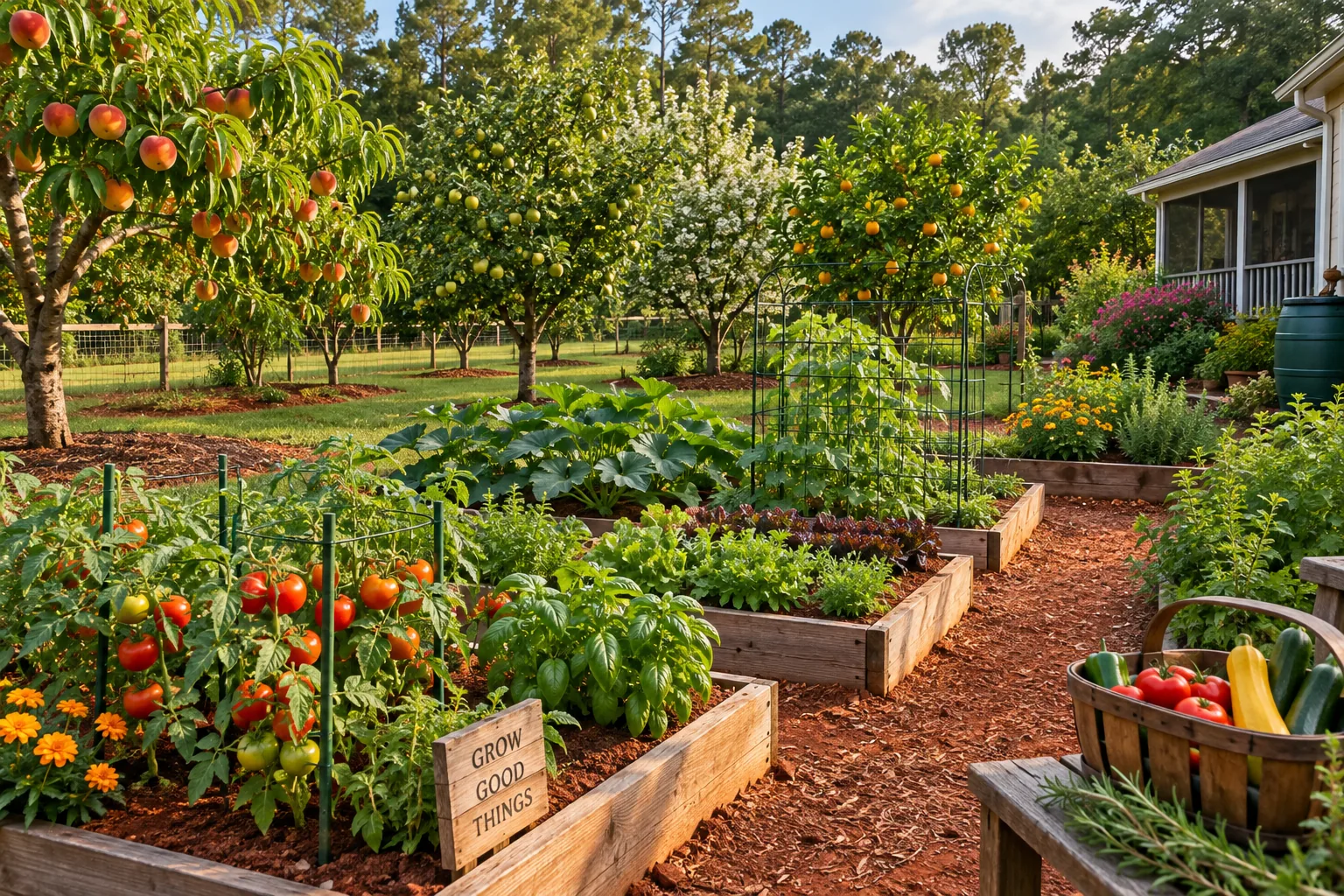
Creating a Pollinator-Friendly Garden
A pollinator garden doesn’t need to be a separate wildflower meadow hidden at the back of the property.
You can weave pollinator habitat into vegetable beds, flower borders, orchards, containers, and landscaping.
The goal is simple: provide food, water, shelter, and safer habitat throughout as much of the year as possible.
Why Pollinators Matter
Bees, butterflies, moths, beetles, flies, hummingbirds, and other animals move pollen between flowers.
Many fruits and vegetables depend on or benefit from pollinator activity.
A pollinator-friendly garden also supports a much larger food web of beneficial insects, birds, and other wildlife.
Plant for More Than One Season
A great pollinator garden has something blooming across the growing season.
Think in waves:
Spring
Provide flowers when early pollinators emerge.
Summer
Offer abundant nectar through Alabama’s hottest months.
Fall
Late-season flowers are especially important as pollinators prepare for winter or migration.
Avoid planting one spectacular species that blooms for two weeks and then leaves the garden empty.
Use a Variety of Flower Shapes
Different pollinators have different feeding structures.
Include:
- Flat flower clusters
- Daisy-like blooms
- Tubular flowers
- Small clustered flowers
- Large composite flowers
Diversity makes the garden useful to more species.
Plant in Groups
Pollinators can locate flowers more easily when several plants of the same species are grouped together.
Instead of one plant each of twenty species, consider small drifts or clusters.
Include Native Plants
Plants native to your region often have strong ecological relationships with local insects.
Native selections can provide:
- Nectar
- Pollen
- Host plants for caterpillars
- Seeds
- Shelter
Choose species suited to your exact site conditions rather than assuming every native plant grows everywhere.
Don’t Forget Host Plants
Butterflies need more than nectar.
Their caterpillars require specific host plants.
A pollinator garden that supports the entire life cycle may include some leaves that get eaten.
That’s success, not damage.
Add Herbs and Vegetables
Many edible plants become excellent pollinator resources when allowed to flower.
Try:
- Basil
- Dill
- Fennel
- Cilantro
- Mint in controlled containers
- Chives
- Oregano
Vegetable flowers from squash, cucumbers, beans, and okra also attract pollinators.
Provide Water Safely
Pollinators need water, but deep open containers can become hazards.
Use:
- Shallow dishes
- Stones for landing
- Damp sand areas
- Frequently refreshed water
Prevent standing water from becoming a mosquito nursery.
Leave Some Habitat
Perfectly clean landscapes provide fewer nesting and overwintering sites.
Consider leaving:
- Hollow stems
- Small patches of bare soil
- Leaf litter in appropriate areas
- Undisturbed corners
Many native bees nest in the ground or in plant stems rather than living in large hives.
Reduce Pesticide Risk
Before using a pesticide:
- Identify the actual pest.
- Decide whether treatment is necessary.
- Choose the least disruptive effective option.
- Avoid spraying open flowers whenever possible.
- Never spray when bees are actively foraging if the product may harm them.
- Follow the label.
Remember that “organic” does not automatically mean harmless to pollinators.
Easy Pollinator Flowers
Depending on your site and location, consider plants such as:
- Zinnias
- Sunflowers
- Coneflowers
- Black-eyed Susans
- Mountain mints
- Goldenrods
- Asters
- Bee balms
- Coreopsis
Favor regionally appropriate native species when possible and avoid invasive plants.
Add Pollinators to the Vegetable Garden
A simple approach:
- Flowers at bed ends
- Herbs along paths
- Native perennial border nearby
- Sunflowers along a fence
- Flowering plants around the orchard
- Containers near patios
You don’t need to sacrifice vegetable-growing space.
Let the Garden Be a Little Messy
A pollinator garden is alive.
Leaves get chewed.
Flowers fade.
Seed heads remain.
Insects appear.
The goal isn’t perfection. The goal is habitat.