
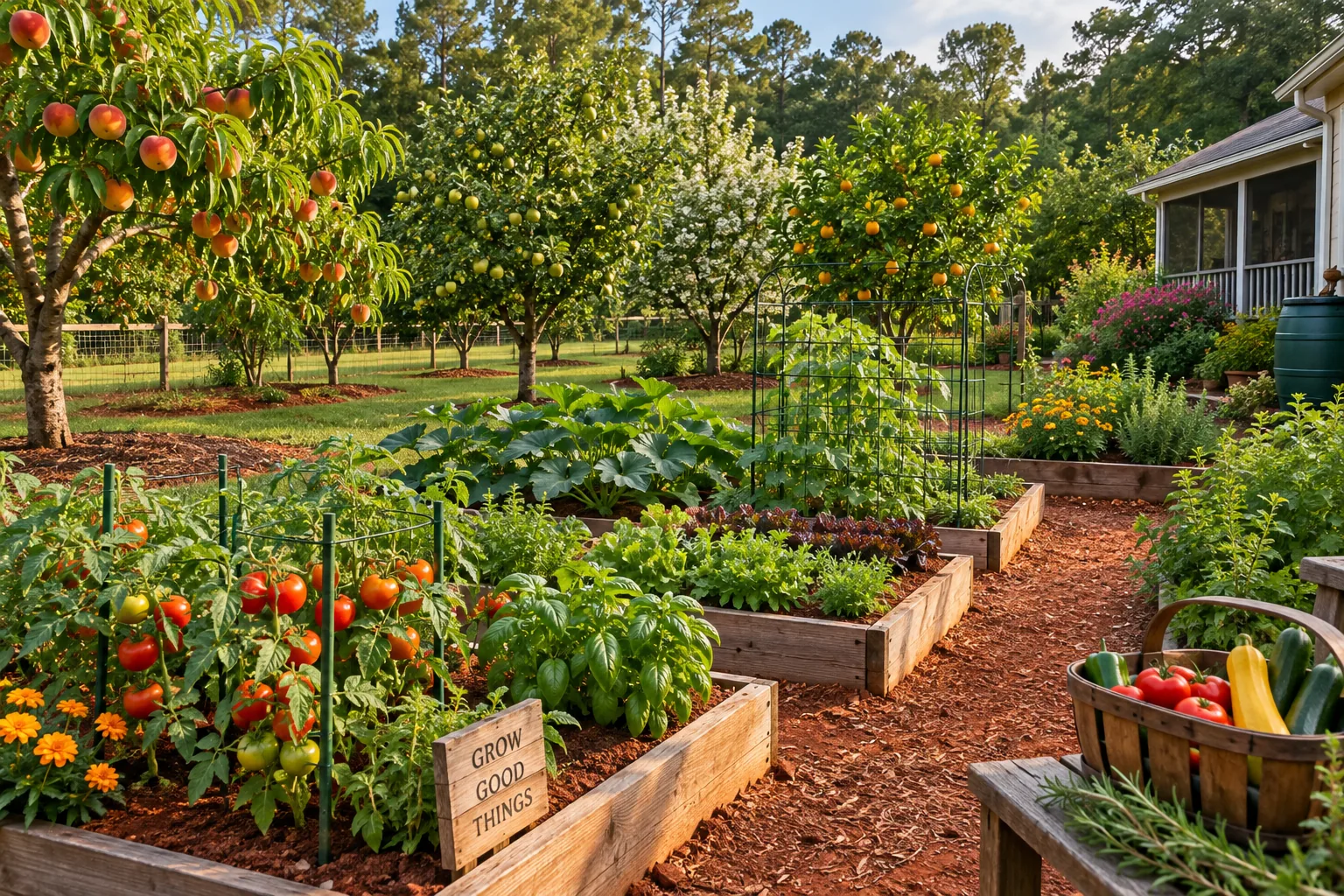
Creating Garden Paths
Garden paths do more than make a garden look organized.
They keep foot traffic off planting soil and make maintenance easier.
Why Paths Matter
Good paths help:
- Reduce soil compaction
- Keep feet out of mud
- Improve access
- Define beds
- Move wheelbarrows
- Control weeds
Path Width
For simple walking paths:
- 18–24 inches may be enough
For wheelbarrows:
- 30–36 inches is more comfortable
Wood Chip Paths
Wood chips are inexpensive and comfortable.
Advantages:
- Reduce mud
- Suppress weeds
- Break down over time
Add more as they decompose.
Gravel Paths
Gravel is durable.
Use edging to keep it contained.
It can become hot in full sun.
Pine Straw Paths
Pine straw is lightweight and easy to spread.
It breaks down faster than gravel or wood chips.
Stepping Stones
Useful in narrow gardens.
Place stones where your natural stride falls.
Avoid Bare Soil
Bare paths quickly become:
- Muddy
- Weedy
- Compacted
GardenGrowz Tip
Make paths wide enough to work comfortably.
A garden that is hard to move through is harder to maintain.