
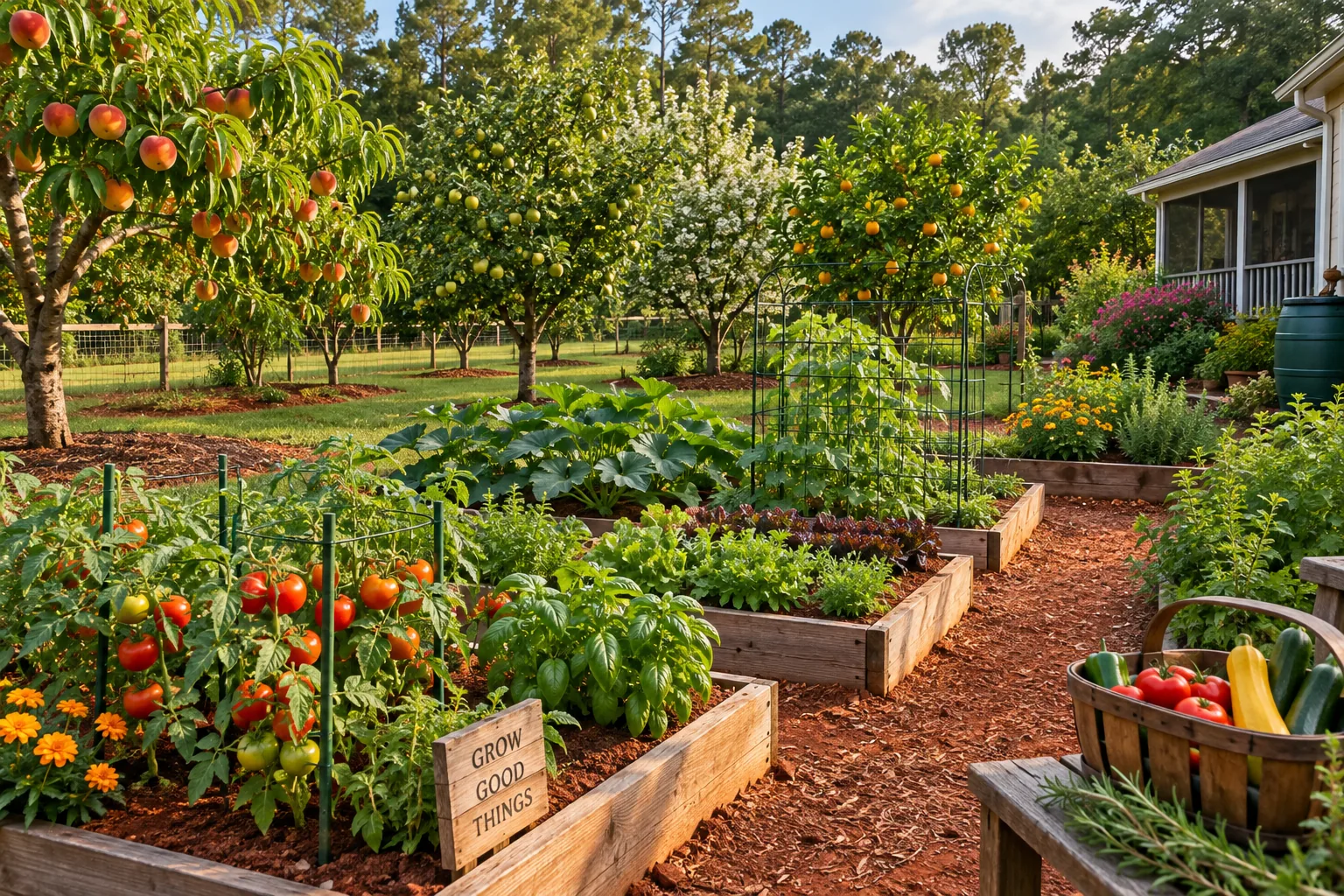
Understanding Alabama Growing Zones
If you’ve ever looked at a plant tag and seen something like Zone 7b or Zone 8a, you’ve already encountered one of the most common gardening tools used in the United States.
Growing zones help gardeners understand how cold their area typically gets in winter.
But there’s an important catch:
Your growing zone tells you something useful—but it does not tell you everything you need to know about gardening in Alabama.
What Is a Growing Zone?
Most gardeners are talking about the USDA Plant Hardiness Zone Map when they refer to growing zones.
The map divides the country into zones based on average annual extreme minimum winter temperatures.
Each major zone covers a 10-degree Fahrenheit range and is divided into two 5-degree subzones:
- Zone 7a
- Zone 7b
- Zone 8a
- Zone 8b
- Zone 9a
The lower the zone number, the colder the expected winter minimum.
What Zones Are Found in Alabama?
Alabama spans several USDA hardiness zones.
In general:
- North Alabama is cooler.
- Central Alabama is somewhat warmer.
- South Alabama has milder winters.
- Coastal areas tend to have the warmest winter conditions.
Your exact zone depends on your location and local conditions.
What a Hardiness Zone Is Good For
Hardiness zones are most useful when choosing perennial plants—plants expected to survive outdoors for multiple years.
Examples include:
- Fruit trees
- Shrubs
- Perennial flowers
- Landscape plants
- Some herbs
- Native plants
If a plant is rated hardy to Zone 8 and you live in Zone 7, winter cold may damage or kill it.
What Hardiness Zones Do Not Tell You
Your USDA zone does not tell you:
- Your last spring frost date
- Your first fall frost date
- Summer heat
- Rainfall
- Humidity
- Soil type
- Drainage
- Wind exposure
- Pest pressure
- Disease pressure
This is especially important in Alabama.
A plant may technically survive winter in your zone and still struggle badly in hot, humid summer conditions.
Alabama’s Heat Matters Too
Gardeners sometimes focus so much on winter cold that they forget about summer heat.
Alabama summers can be:
- Hot
- Humid
- Wet
- Dry
- Or all four within the same month
A plant that survives winter may still fail if it cannot tolerate prolonged heat and humidity.
Your Yard Has Its Own Microclimates
Even within the same property, conditions can vary.
A microclimate is a small area with conditions that differ from the surrounding space.
Examples include:
- A south-facing wall that stays warmer
- A low spot that collects cold air
- A shaded side yard
- A windy hilltop
- A protected courtyard
- A wet area near a downspout
- A sunny patio surrounded by brick
These areas can behave differently from the official zone listed for your ZIP code.
Fruit Trees Need More Than a Zone
Fruit trees are a perfect example of why growing zones are only part of the picture.
In addition to winter hardiness, fruit trees may require:
- Specific chill hours
- Proper pollination partners
- Suitable summer heat
- Good drainage
- Protection from late frosts
A peach variety that performs beautifully in North Alabama may not be the best choice farther south.
Vegetable Gardens Use Different Timing
USDA hardiness zones are less important for annual vegetables.
For crops such as tomatoes, peppers, lettuce, and beans, pay more attention to:
- Frost dates
- Soil temperature
- Seasonal planting windows
- Days to maturity
- Local weather
A tomato does not care much whether your official zone is 7b or 8a. It cares whether it gets planted into cold soil before a late freeze.
Growing Zone vs. Planting Zone
These terms are often used interchangeably online, but they are not exactly the same thing.
A hardiness zone describes winter cold.
A planting schedule tells you when crops are most likely to succeed.
For Alabama vegetable gardening, seasonal planting dates are usually more useful than hardiness zones.
How to Use Your Zone
Use your USDA zone when selecting perennial plants, but combine it with local knowledge.
Before planting, ask:
- Is the plant winter-hardy here?
- Can it handle Alabama summer conditions?
- Does it fit my soil and drainage?
- Does it need a certain number of chill hours?
- Does it need a pollination partner?
- Is my specific planting spot hotter, colder, wetter, or drier than average?
GardenGrowz Tip
Think of your growing zone as one layer of information—not a complete gardening instruction manual.
Your best gardening decisions come from combining:
- USDA hardiness zone
- Local frost dates
- Soil conditions
- Sun exposure
- Alabama’s seasonal weather
- What you observe in your own yard
That’s when a map becomes useful knowledge.