
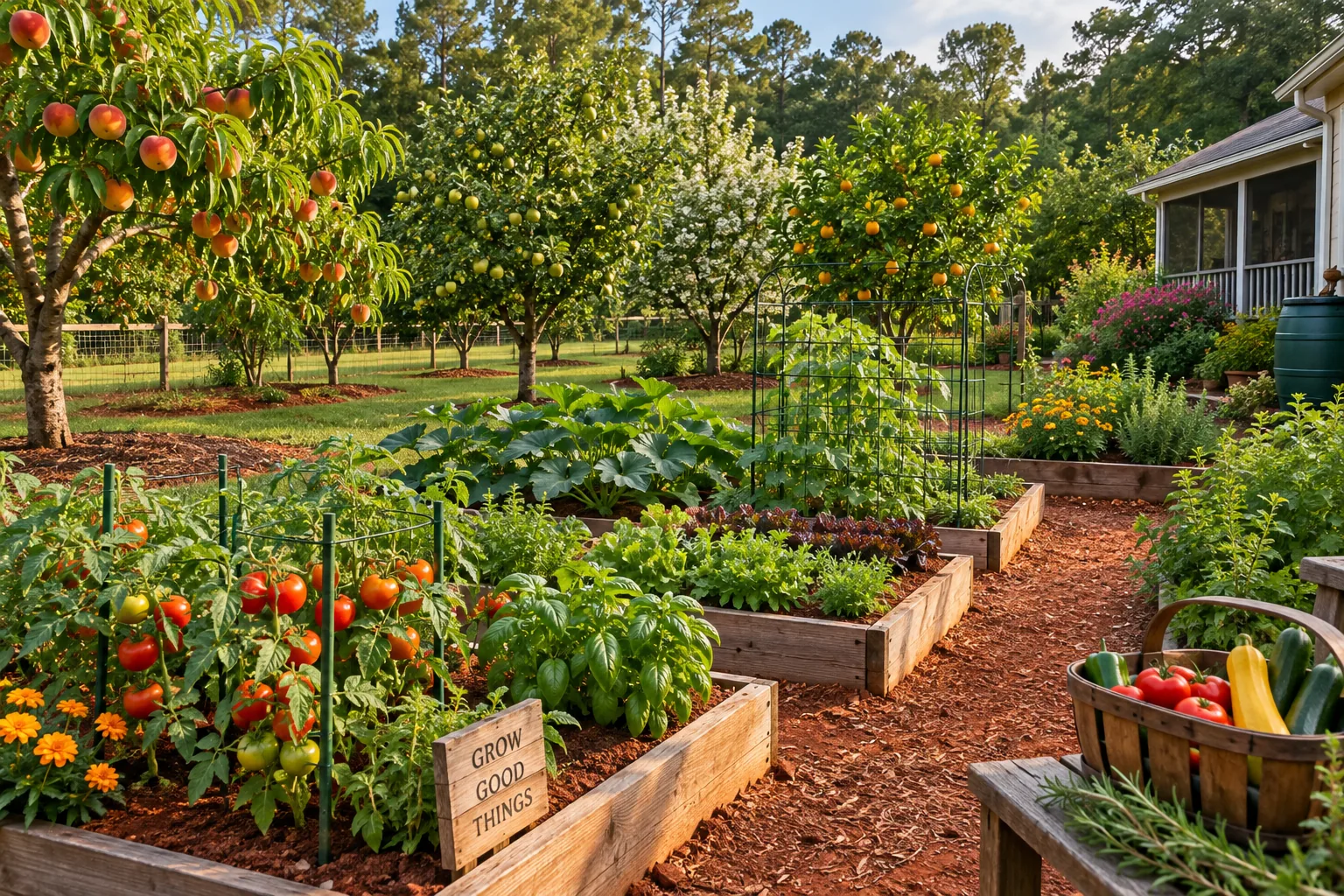
Understanding Alabama’s Growing Seasons
One of the best things about gardening in Alabama is that we can grow food during much of the year.
Instead of thinking in terms of one gardening season, it is more useful to think about several distinct periods.
Each season favors different crops.
Alabama Has Multiple Growing Seasons
A typical Alabama gardening year includes:
- Late winter and early spring cool-season gardening
- Spring and summer warm-season gardening
- Mid- to late-summer transition planting
- Fall cool-season gardening
- Winter harvest and season extension in many areas
The exact dates vary across North, Central, and South Alabama.
Cool-Season Crops
Cool-season vegetables grow best during mild temperatures.
Examples include:
- Lettuce
- Spinach
- Kale
- Collards
- Broccoli
- Cabbage
- Carrots
- Radishes
- Turnips
- Mustard greens
- English peas
Many of these crops can tolerate light frost.
Some even improve in flavor after cool weather.
Warm-Season Crops
Warm-season vegetables need warmer soil and air temperatures.
Examples include:
- Tomatoes
- Peppers
- Eggplant
- Cucumbers
- Squash
- Green beans
- Okra
- Sweet corn
- Southern peas
- Watermelon
- Cantaloupe
- Sweet potatoes
These crops should not be rushed into cold soil.
A warm afternoon in February or March does not mean summer crops are ready to plant.
The Spring Transition
Spring is a balancing act.
Cool-season crops may still be producing while warm-season crops are waiting to go in.
This means your garden may briefly contain both.
A useful strategy is to:
- Harvest cool-season crops as they mature.
- Remove spent plants.
- Add compost.
- Replant the same space with warm-season crops.
This keeps beds productive without requiring a huge garden.
Summer Is Not the End of Planting
Many beginners stop planting once summer begins.
In Alabama, that misses an important opportunity.
By mid- to late summer, it is time to start thinking about fall crops.
This feels strange because fall gardening often begins while temperatures are still extremely hot.
Fall Gardening
Fall is an excellent season for:
- Collards
- Kale
- Broccoli
- Cabbage
- Lettuce
- Carrots
- Radishes
- Turnips
- Mustard greens
Once temperatures cool, many of these crops grow better than they did during spring.
Pest pressure can also become easier to manage later in the season.
Winter Gardening
Winter gardening depends heavily on location.
South Alabama may continue harvesting and growing cool-season crops much longer than North Alabama.
Season-extension tools can help:
- Floating row cover
- Cold frames
- Low tunnels
- Frost cloth
Even when plant growth slows, many cold-hardy crops remain harvestable.
North, Central, and South Alabama
Planting dates vary across the state.
North Alabama
- Later spring warm-up
- Earlier fall frost
- Shorter warm-season window
Central Alabama
- Moderate transition timing
- Good mix of spring, summer, and fall gardening
South Alabama
- Earlier spring
- Later fall frost
- Longer warm-season period
- Greater heat pressure during summer
Think in Temperature, Not Just Months
Calendars are helpful, but plants respond to conditions.
Pay attention to:
- Soil temperature
- Nighttime temperatures
- Frost risk
- Day length
- Heat
- Rainfall
Succession Planting Extends the Season
Instead of planting everything once, make repeat plantings.
Examples:
- Radishes every 1–2 weeks
- Lettuce every 2–3 weeks
- Beans every few weeks
- Cucumbers in multiple rounds
This gives you a longer harvest and reduces the chance that weather ruins your entire crop at once.
GardenGrowz Tip
The Alabama gardener’s biggest advantage is a long growing season.
Use it.
Rather than trying to plant everything in spring, plan for:
- Spring
- Summer
- Fall
Your garden can produce much more without becoming much larger.